Dental Implant Maintenance: Cleaning Crowns and Implant-Supported Bridges
Dental Implant Maintenance: Why Long-Term Care Determines Success
Dental implants support replacement teeth, but the surrounding tissues still need daily cleaning and professional care. Surgical planning, health, restoration design, and maintenance all influence long-term outcomes. This guide focuses on what you can do at home—and what needs a clinician.
Daily Hygiene Requirements
Implants require:
- Mechanical plaque removal
- Access around prosthetics
- Consistent routines
If an area is difficult to reach, ask for a demonstration rather than assuming that more force or a stronger mouthwash is the answer.
Recommended Daily Care
- Brush twice daily with soft bristle brush
- Use interdental brushes around implants
- Water flossers help clean hard-to-reach areas
- Non-abrasive toothpaste recommended

Professional Maintenance
Regular professional care includes:
- Implant-specific cleaning
- Bone level monitoring
- Prosthetic inspection
Implants cannot be "checked" visually alone.
Recommended Schedule
- A recall interval based on your tissue health, restoration, and medical history
- More frequent visits when the clinician identifies additional risk
- Imaging when clinically indicated, including comparison with earlier records
Occlusal Monitoring
Bite forces change.
Monitoring prevents:
- Overload
- Component fatigue
- Bone stress
Ignoring bite changes accelerates failure.
Maintenance vs Replacement
Not every complication is caused by home care. A loose screw, damaged restoration, inflammation, and loss of bone support need different evaluations. Maintenance can help detect changes but does not guarantee that an implant will never need further treatment.
Four practical steps for an implant-supported bridge
1. Know whether the restoration is fixed or removable
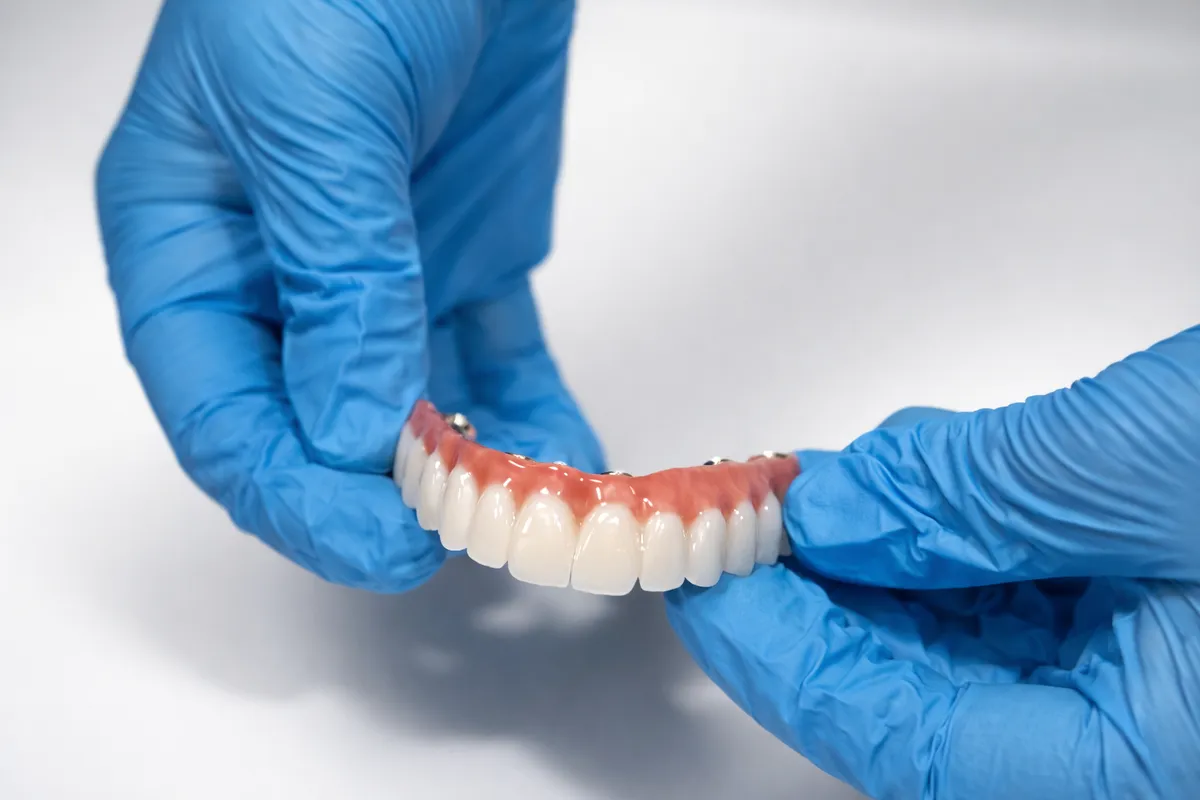
A fixed bridge stays attached while you clean it; do not attempt to remove it. A snap-in denture is designed to come out according to your care instructions. The routines are not interchangeable. Ask the team to show you your attachment system and identify the surfaces that need cleaning.
For a fixed bridge, bacteria and food can collect beneath the replacement teeth as well as along the gumline around each supporting implant. Brushing only the visible outer surfaces misses those spaces. Cleveland Clinic describes daily cleaning beneath bridges using tools suited to the design.
2. Brush gently and clean beneath the bridge every day
Use a soft toothbrush and the toothpaste recommended for your restoration. Clean the outer, inner, and chewing surfaces, then work around the gumline without aggressive scrubbing.
Depending on available space, your team may recommend a floss threader, an appropriate interdental brush, or another implant-compatible tool. Ask them to demonstrate the route under the bridge and let you practice. A water flosser may be a useful addition when recommended, but should not automatically replace the mechanical cleaning method you were shown.
Do not force floss or a brush through a space that will not accommodate it. If floss consistently shreds, gets stuck, or cannot pass, contact the team. The problem may be the technique, tool size, or restoration's contours. Sharp metal picks and improvised tools can injure tissues or damage surfaces.
3. Match food choices to the treatment stage
A newly placed temporary bridge has different restrictions from a healed final restoration. During healing, follow your surgeon's diet instructions even if the teeth feel firm. Being able to bite something does not establish that the implants are ready for that load.
After clearance for normal eating, avoid habits such as chewing ice, cracking shells, or using teeth to open packaging. Cut difficult foods into manageable pieces. If an ordinary meal suddenly causes pain, clicking, or movement, stop loading that area and arrange an assessment rather than testing it repeatedly.
For early recovery, use our temporary implant teeth guide instead of treating this long-term routine as postoperative advice.
4. Keep professional reviews and report changes
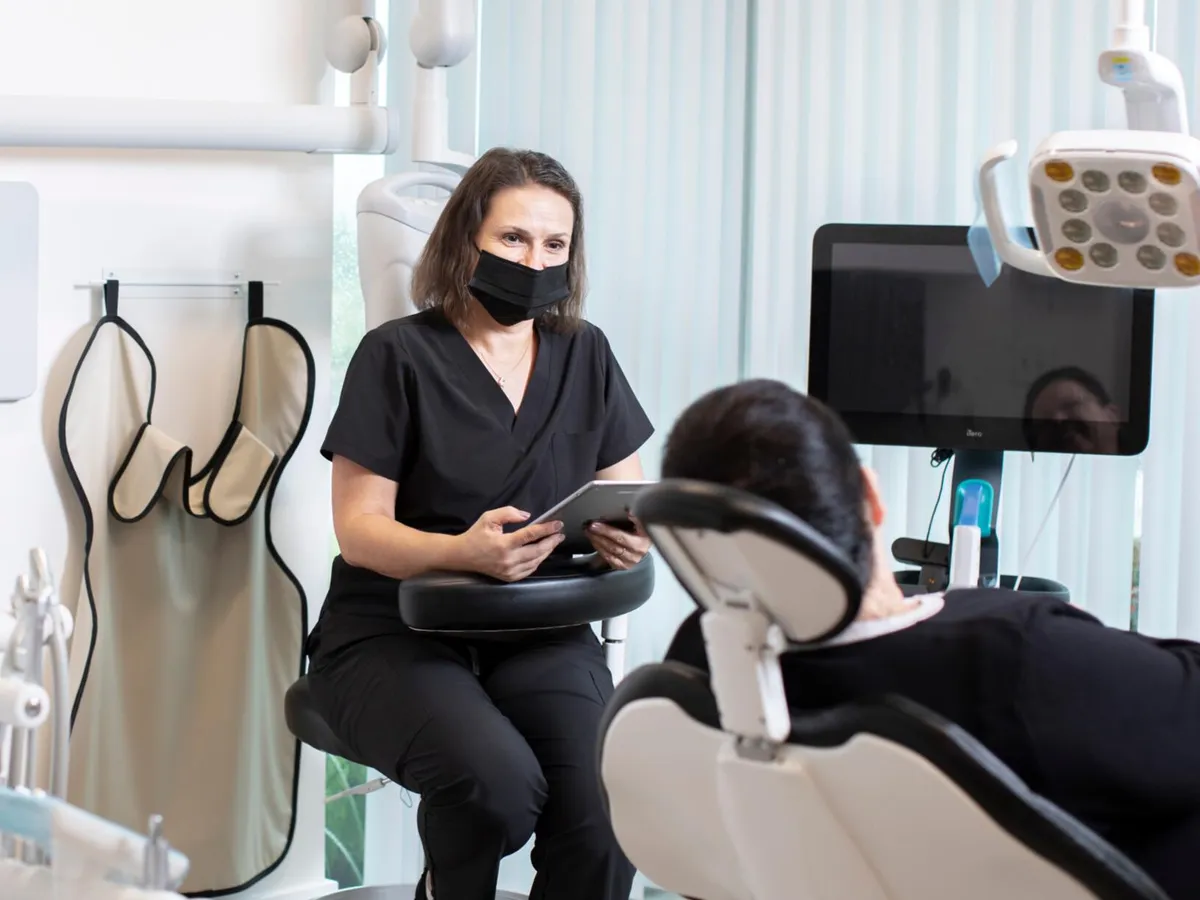
At a maintenance visit, the team can check tissue health, cleaning access, wear, connectors, and your bite. Removal of a fixed bridge is not automatically needed at every appointment; the clinician decides what examination or access is appropriate.
Report recurrent food trapping, an unpleasant taste, bleeding, or a new gap beneath the bridge. Do not hide persistent symptoms by repeatedly using mouthwash or leftover antibiotics. Ask whether the cleaning routine or restoration needs adjustment.
A care checklist to take home
- Which brush and toothpaste suit my restoration material?
- How should I pass floss or an interdental brush beneath it?
- Is a water flosser appropriate, and what settings should I use?
- What changes should prompt a call rather than waiting for recall?
- When is my next visit, and what maintenance costs should I budget for?
- If I grind my teeth, how should I clean and check my prescribed guard?
If hand strength, vision, or mobility makes cleaning difficult, mention it during planning. The design should be maintainable in everyday life; a more complex routine is not automatically a better one.
Questions about bridge care
Do implant-supported bridges get cavities?
The artificial teeth and implants do not get tooth decay, but nearby natural teeth can. The tissues around implants can also become inflamed or lose bone support.
Is a water flosser enough by itself?
Not necessarily. Ask your team which combination of tools reaches your implant surfaces and the underside of your bridge. Do not replace the prescribed routine without discussing it.
Should I remove a fixed bridge to clean it?
No. Fixed bridges are removed by dental professionals when indicated. Removable snap-in dentures are different and should be handled according to their instructions.
What if the bridge moves?
Contact the dental team promptly, avoid chewing on it, and do not tighten or glue it yourself. Movement can come from different parts of the system and needs examination.
Warning Signs to Report
New bleeding, swelling, discharge, persistent bad taste, or a change in how an implant restoration feels deserves assessment. Do not assume these symptoms are normal aging of the implant or try to tighten a loose component yourself. See our peri-implantitis treatment guide for the difference between home cleaning and care for diagnosed disease.
When comparing treatment quotes, ask about the cost and schedule of ongoing professional maintenance. Our full-mouth implant cost guide includes a checklist for separating initial treatment fees from later care.
Contact us immediately if you notice:
- Bleeding when brushing
- Swelling around implants
- Looseness or movement
- Pain or discomfort
- Changes in how your teeth come together
Long-Term Perspective
Implants are medical devices embedded in living tissue.
Longevity is earned through:
- Planning
- Execution
- Maintenance
Skipping any phase compromises the outcome.
Implant follow-up in Roseville and El Dorado Hills
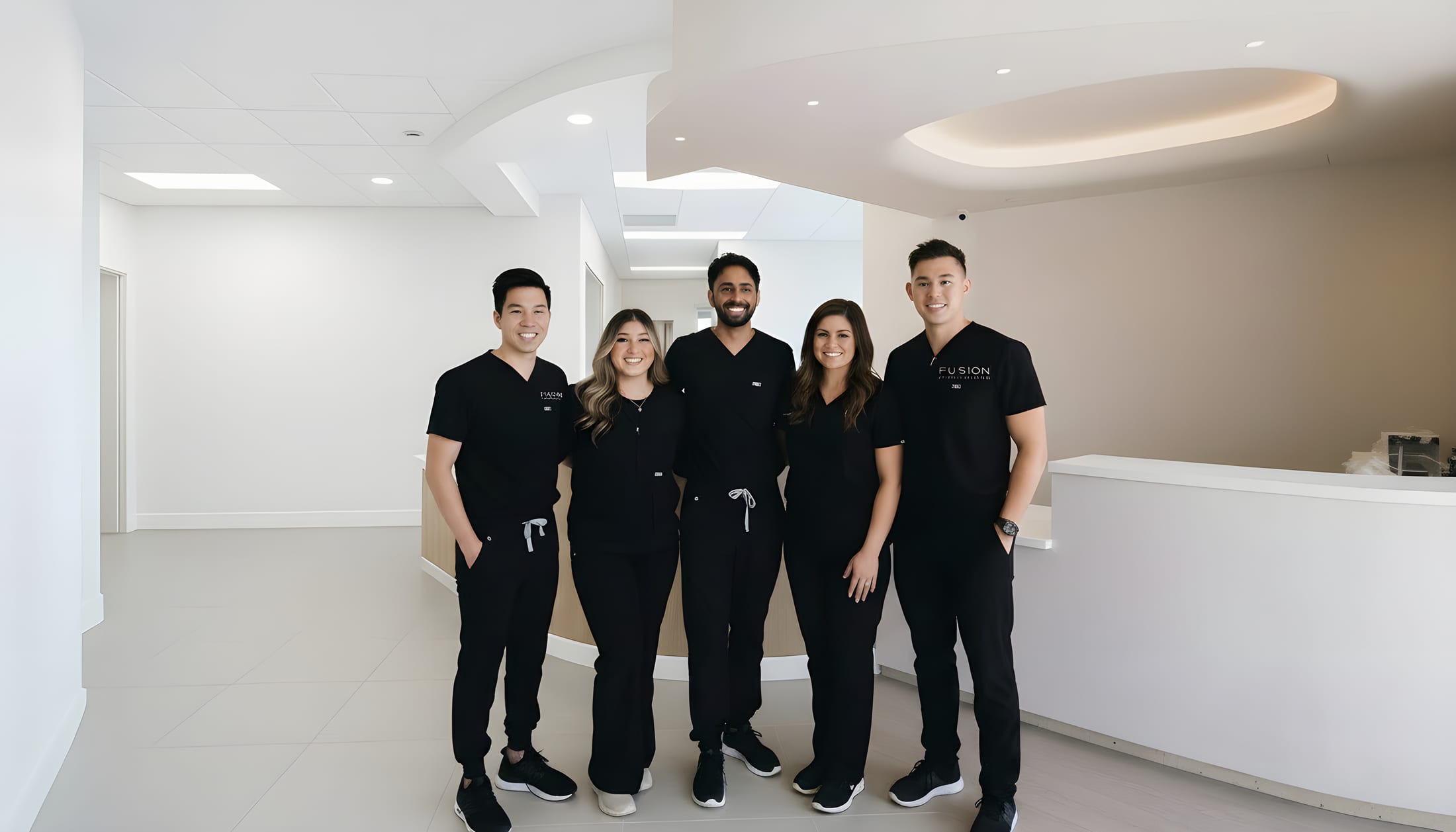
At Fusion Dental Implants, we provide comprehensive maintenance programs tailored to your needs. Our hygienists are trained in implant-specific care protocols.
Learn about your journey with us
Schedule your maintenance visit
About Fusion Dental Implants: Committed to your long-term success in Roseville and El Dorado Hills, serving patients throughout Northern California.
The FDA's patient recommendations emphasize regular cleaning, follow-up, and prompt reporting of loose or painful implants.
Ready to Transform Your Smile?
Schedule your free consultation today and discover how dental implants can change your life.